Losing a loved one is always difficult, and navigating the estate administration process can feel overwhelming. As a beneficiary, you may have questions about when you will receive your inheritance, what to expect during probate, and how estate decisions are made.
This guide focuses on estate administration via the probate process. However, it’s important to note that not all assets go through probate. Living trusts, retirement accounts, and life insurance policies typically pass directly to named beneficiaries, bypassing probate altogether. This guide will primarily address assets that are subject to probate, but we encourage you to consult with your estate’s Executor or trustee if you are receiving non-probate assets.
Understanding the Estate Administration Process
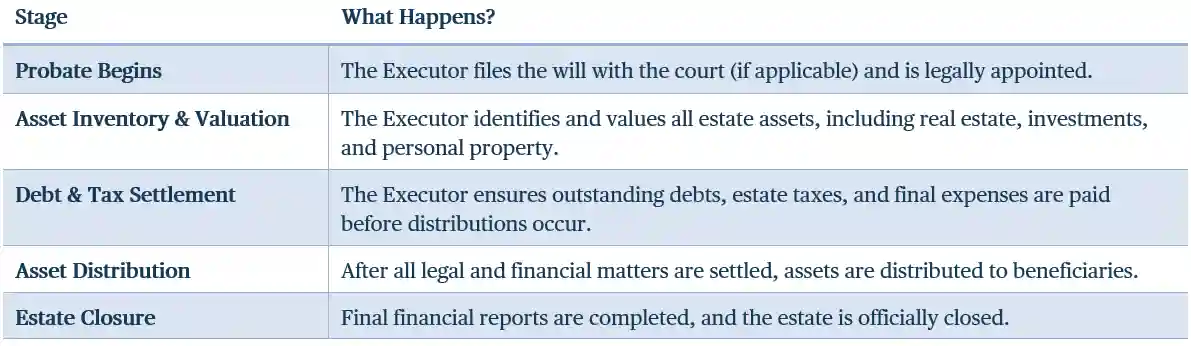
Estate administration is a multi-step legal and financial process that ensures assets are distributed according to the deceased’s wishes or state law (if no will exists). Below is an overview of what to expect.
Key Stages of Estate Administration
Estate Assets vs. Non-Probate Assets
Not all assets pass through probate. Here’s a brief distinction between estate assets (which go through probate) and non-probate assets (which transfer directly to beneficiaries):
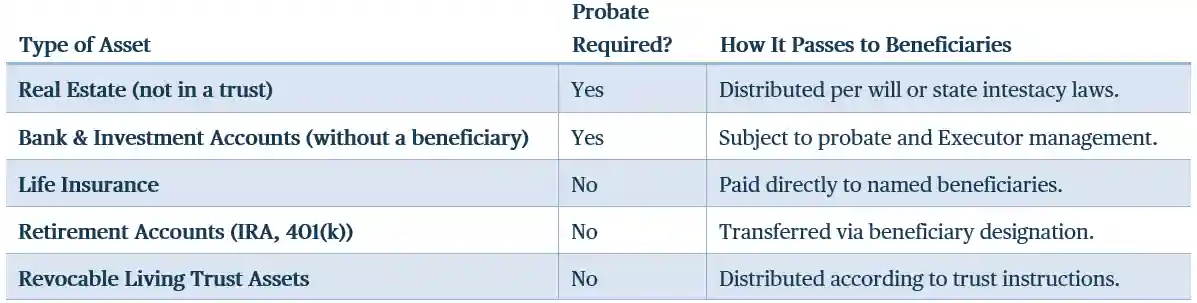
Understanding this distinction can help beneficiaries set realistic expectations about which assets they will receive and when. Generally, assets that do not have to go through probate are available to beneficiaries faster than assets that are subject to the probate process.
Timeline: When Can I Expect to Receive My Inheritance?
While every estate is unique, the average timeline for estate settlement is 6-18 months, depending on complexity.

Delays may occur if:
- There are disputes among beneficiaries.
- Assets like real estate or private business interests need to be liquidated.
- The estate is subject to estate taxes.
Common Beneficiary Concerns & How to Address Them
Why is the process taking so long?
- Probate and estate administration involve court approvals, creditor notifications, and tax filings, all of which take time.
- Executors have a legal obligation to ensure debts and taxes are settled before distributing assets. If they don’t take these steps, they may be held personally liable for unpaid debts of the Estate.
How will I receive my inheritance?
- Cash distributions are typically sent via check or wire transfer.
- Investment assets may be transferred directly to a beneficiary’s brokerage account in-kind or liquidated.
- Real estate or personal property may require additional legal work before ownership is transferred.
Do I have to pay taxes on my inheritance?
- In most cases, inheritances are not subject to income tax. However:
- If you inherit an IRA or retirement account, required distributions may be taxable.
- Some states impose inheritance taxes based on the beneficiary’s relationship to the deceased.
- Capital gains taxes may apply if you sell inherited assets at a higher value than their step-up basis.
What if I disagree with the Executor’s decisions?
- Executors have a legal duty to act in the best interest of the estate and all beneficiaries.
- If you have concerns, request a copy of the estate’s accounting records and speak with an attorney.
Your Role as a Beneficiary
While the Executor manages the estate, beneficiaries should:
- Stay informed – Request periodic updates on the estate’s progress.
- Be patient – Understand that estate settlement is a detailed legal process that takes time, and much of the delay is going to be outside of the Executor’s control.
- Communicate concerns professionally – If you have questions, reach out to the Executor respectfully and make your concerns known.
- Plan for your inheritance – Consider tax implications and financial planning strategies.
FBG's Role in Estate Administration
At FBG, we help Executors and beneficiaries navigate estate settlements by:
- Managing estate liquidity & investments, ensuring financial stability during probate.
- Providing tax-efficient distribution strategies, minimizing tax burdens on beneficiaries.
- Offering beneficiary education & financial planning, helping you make informed decisions about your inheritance.